

Mobile apps testing strategy: An example test plan
Create an effective testing strategy for your mobile app. Learn about...
Explore top iPhone emulators for app development. Compare features, test iOS apps, and debug without a physical device.

iPhone emulators run apps in a virtual environment that replicates the real-world conditions of an iPhone device. Developers use these emulators to test their apps across a wide range of iPhone models and iOS versions, identifying and fixing performance issues before releasing to the App Store.
This article will cover the different iPhone emulators currently available, their features, and where they’re best used. Moreover, this post will explain what to look for when choosing an iPhone emulator.
If you’re looking for the best iPhone emulators for app development, here are the key points to know:
TL;DR: iPhone emulators replicate iOS devices virtually, enabling app testing and debugging without real hardware.
An iPhone emulator is software that replicates the hardware and software environment of an iOS device, allowing developers to run and test apps without a physical iPhone.
The ACM Digital Library explains that “an emulator in computer sciences duplicates (provides an emulation of) the functions of one system using a different system, so that the second system behaves like (and appears to be) the first system.”
This focus on reproducing a device’s external behavior enables developers to test applications in environments that closely resemble real hardware without requiring the physical device.
iPhone emulators create virtual environments that mimic how applications behave on real Apple devices.
By reproducing key aspects of an iPhone—such as the operating system, device configuration, screen size, and system interactions—developers can launch, test, and debug their apps during development. This allows teams to validate application behavior before deploying it to real devices or releasing it to the App Store.
Instead of emulating iPhone hardware, a simulator runs the app in an iOS-like environment.
TL;DR: Emulators mimic hardware and software, while simulators only replicate the OS—making simulators faster but less realistic.
In practice, many tools labeled “iPhone emulators” are actually iOS simulators or device virtualization environments. While these terms are often used interchangeably, they represent slightly different approaches to testing.
An emulator replicates a device’s software and hardware environment, allowing developers to simulate how an app interacts with device-level components.
A simulator, on the other hand, primarily recreates the operating system and application environment without fully replicating the device hardware.
Instead of emulating iPhone hardware, a simulator runs the app in an iOS-like environment.
Because simulators rely on the host computer’s hardware rather than replicating a full device, they typically run much faster and are easier to launch. This makes them ideal for developers who need quick feedback while building and debugging applications.
Both emulators and simulators allow development and QA teams to test applications across multiple device models, operating system versions, and screen configurations without maintaining a large inventory of physical devices.
TL;DR: Emulators recreate device-level behavior like CPU and memory, offering deeper testing but requiring more resources.
An emulator attempts to replicate both the software and hardware environment of a device. This includes reproducing device-level behavior such as processor architecture, memory usage, and system-level interactions.
Because emulators simulate the device hardware more deeply, they can provide a more realistic testing environment for certain scenarios. However, this also makes them more resource-intensive and slower than simulators.
An emulator attempts to replicate both the software and hardware environment of a device.
TL;DR: Teams use emulators to cut costs, speed up debugging, and test across multiple devices without physical labs.
A small mobile development team needed to test their iOS app across multiple iPhone models and iOS versions. Purchasing and maintaining a physical device lab with 10–15 iPhones would have cost thousands of dollars and required additional device management.
The team used iPhone emulators and simulators to create virtual devices representing different iPhone models and operating system versions. Developers and QA engineers could quickly switch between device profiles during testing.
The team reduced device testing costs by 70%, eliminated the need to maintain a physical device lab, and increased test coverage across 12 different device configurations without purchasing additional hardware.
A mobile development team releasing updates every two weeks struggled with slow debugging cycles. Each time a bug appeared, developers had to deploy the app to a physical device and manually reproduce the issue.
They integrated iOS simulators into their development workflow so developers could run and debug applications instantly from their development environment.
Bug reproduction and debugging time dropped by 40–50%, allowing developers to resolve issues faster and shorten release cycles from two weeks to ten days.
A QA team preparing an app for App Store submission needed to ensure the app behaved correctly across multiple iOS versions and device screen sizes before publishing the release.
They used a combination of iPhone simulators and beta testing tools to replicate real-device environments and test the application across multiple iOS versions and device configurations.
The team identified three major compatibility issues before release, which would have led to negative user reviews and a poorer overall app launch experience.
A growing startup with a distributed QA team needed to test its iOS application across several device types while keeping testing costs low and ensuring a consistent user experience.
The team implemented emulator-based testing environments that enabled developers and testers in different locations to run the same virtual device configurations during development and QA.
The team increased test coverage by 60%, reduced testing infrastructure costs, and maintained a consistent user experience across devices without requiring physical iPhones to be shipped between teams.
Generally, emulators provide developers with a controlled, flexible, and cost-effective means to test their applications comprehensively before deployment.
TL;DR: Emulators enable scalable, cost-effective testing across devices and scenarios, helping identify issues early.
The need for iPhone emulators arises from the complexity of modern app development. With numerous iOS devices on the market, ensuring consistent functionality and optimal performance across them is a formidable task.
Generally, emulators provide developers with a controlled, flexible, and cost-effective means to test their applications comprehensively before deployment.
These tools provide several advantages:
TL;DR: Combine simulators, emulators, automation, and real devices for a complete and reliable testing strategy.
Testing and building iOS applications traditionally required access to multiple physical iPhones and iPads to ensure compatibility across different device models and iOS versions.
However, maintaining a large collection of Apple devices can be expensive and difficult to manage, especially for smaller development teams or distributed QA environments.
A more efficient approach is to combine iPhone emulators, iOS simulators, and cloud-based testing environments. These tools allow developers to replicate multiple device configurations without needing to own every physical device.
Most iOS developers begin testing with the built-in simulator included in Apple’s development tools. Simulators allow developers to quickly launch apps, test user interfaces, and debug application logic without deploying the app to a real device.
Emulators and virtualization platforms go a step further by replicating device behavior and operating system environments more closely.
This allows development teams to test applications under different configurations, including older iOS versions or alternative device profiles.
Many development teams integrate emulator-based testing into their continuous integration and continuous delivery (CI/CD) pipelines. Automated test suites can run across multiple virtual devices, validating key application workflows after each code change.
Although emulators and simulators are extremely useful, they cannot perfectly reproduce every hardware-specific behavior. Features such as camera access, biometric authentication, or hardware sensors may still require testing on real devices.
As a result, many teams use a hybrid testing strategy, where emulators handle most development and testing tasks, while physical devices are used for final validation before release.
TL;DR: Different tools offer varying strengths—from quick UI testing to deep simulation—based on your needs.
To navigate the complex landscape of mobile app development, iOS developers rely on tools that replicate device behavior and help identify potential issues before apps reach production. Let’s explore the top ten iPhone emulators, their features, and what they’re best used for.
The iPhone emulator in Tricentis products is a sophisticated tool that enhances iOS app development and testing. This emulator provides developers with a simulated platform to comprehensively evaluate their apps, ensuring optimal performance across various iOS devices and scenarios.
Tricentis focuses on enterprise-grade mobile testing and automation, helping development and QA teams integrate mobile testing directly into their software delivery pipelines.
Smartface is an iPhone emulator that enables developers to build apps that run on multiple platforms, including iOS, Android, and Windows. As an emulator for iOS app development on Windows, Smartface’s user-friendly interface is a testament to accessibility.
Appetize.io is an iPhone emulator that helps developers get immediate feedback so they can make necessary changes and improve the quality of their apps. With browser-based access, it provides an instant gateway to real-time testing, eliminating the need for cumbersome downloads and the installation of complex local environments.
Xcode Simulator is Apple’s official tool for testing and debugging iOS apps. It provides developers with a free, easy way to test their apps across a variety of devices and iOS versions. Seamlessly integrated into Xcode, it provides a native iOS environment for testing.
Corellium is an iPhone emulator that allows developers to run iOS apps on non-Apple hardware. This makes it a valuable tool for security-conscious developers who want to test their apps in a safe and controlled environment.
Delta Emulator is an iPhone emulator that provides a high-fidelity emulation of iOS software, hardware, and functionality, making it ideal for testing and debugging apps across a wide range of devices and iOS versions.
In addition, it’s cross-platform compatible so that you can use it on Windows, macOS, and Linux. This makes it a versatile tool that can be used by developers working on any OS.
Unlike traditional simulators, Corellium provides full iOS virtualization, enabling deeper inspection of operating system behavior and security testing.
Electric Mobile Studio is a premium iPhone emulator that elevates iOS app development with unprecedented precision. This emulator’s exceptional features and capabilities are tailored for developers who demand impeccable accuracy and robust debugging throughout their app creation process.
TestFlight is not a traditional emulator but rather a beta-testing platform provided by Apple. It allows developers to distribute pre-release versions of their applications to testers for feedback before the official App Store release.
Test App is a simplified environment designed to support iOS application testing workflows. Tools like Test App environments make it easier for developers and QA engineers to validate functionality, debug issues, and test device compatibility.
Adobe AIR is an iPhone emulator for creating cross-platform apps. It enables developers to build apps that run on iOS, Android, and Windows.
While not a dedicated iPhone emulator, Adobe AIR provides a runtime environment that helps developers deploy and test applications across platforms.
TL;DR: Choose based on accuracy, features, compatibility, integration, ease of use, and budget.
Choosing the right emulator for your app development workflow is not just about finding a tool that can launch an iOS screen.
The best option depends on your team’s development environment, testing goals, budget, and the degree to which you need the testing experience to reflect real device behavior.
Here are the main factors to consider when selecting your perfect emulator:
The emulator should reflect real iPhone behavior as closely as possible so your test results are meaningful.
Performance accuracy is one of the most important factors. The emulator should reflect real iPhone behavior as closely as possible so your test results are meaningful.
If the environment does not accurately reproduce device behavior, your team may miss issues with rendering, responsiveness, memory usage, app startup time, or navigation flow.
Not all emulators provide the same level of testing support. Some are mainly designed for basic app previews, while others support deeper debugging, automation, performance analysis, and broader test coverage.
A robust testing platform should enable your team to do more than simply open the app. It should support activities such as inspecting logs, tracing crashes, and validating UI behavior.
Compatibility is another critical consideration. Your emulator should support the iPhone models, screen sizes, and iOS versions that matter most to your users.
iOS fragmentation is not as wide as in some other mobile ecosystems, but it still matters. Users may be running different versions of iOS or using older iPhone models with different screen dimensions and performance profiles.
An emulator should fit naturally into your existing workflow instead of slowing it down. This means checking whether the tool integrates with your IDE, test automation stack, CI/CD pipeline, defect tracking process, and reporting workflows.
For example, developers working in Xcode may prioritize seamless integration with Apple’s native tools, while enterprise QA teams may need compatibility with broader test management and automation platforms.
A tool may be powerful, but if it is difficult to configure or use consistently, it can reduce team productivity.
Ease of use matters for both developers and testers. A clean interface, clear setup process, accessible debugging tools, and simple device selection can make day-to-day testing much faster.
Many development and QA teams now work across multiple locations, so collaboration features can significantly affect the value of the tool.
Cloud-based emulators and shared testing platforms make it easier for distributed teams to access the same environments, reproduce issues, and validate fixes without shipping devices between locations.
When evaluating cost, it is important to look beyond the subscription price alone. Consider the value the platform provides in terms of time savings, test coverage, and automation support.
Cost is also a practical factor. Some tools are free or bundled into development environments, while others require paid subscriptions or enterprise licensing.
When evaluating cost, it is important to look beyond the subscription price alone. Consider the value the platform provides in terms of time savings, test coverage, and automation support.
iPhone emulators play an essential role in modern iOS development. They allow developers and testing teams to validate app functionality, identify bugs early, and optimize performance across different device configurations and iOS versions without relying solely on physical hardware.
By incorporating emulators into the development workflow, teams can accelerate testing cycles, improve collaboration, and ensure their applications deliver consistent user experiences across Apple’s ecosystem.
Selecting the right emulator or testing platform ultimately depends on your development environment, testing strategy, and the level of accuracy required for your app.
→ Get started with Tricentis Mobile Solutions to streamline mobile testing, improve coverage across iOS devices, and support faster, more reliable release cycles.
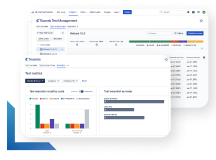
Learn how to supercharge your quality engineering journey with our advanced testing solutions.
Learn how to supercharge your quality engineering journey with our advanced testing solutions.
No, a true iPhone emulator generally cannot run natively on Windows because Apple’s iOS development tools are designed primarily for macOS. Developers who need to test iOS apps on Windows typically rely on cloud-based platforms, cross-platform tools, or remote macOS environments to run iOS simulators and test cases.
An iPhone emulator replicates both the hardware and software environment of an iOS device, while an iOS simulator primarily recreates the operating system environment. In practice, most iOS development workflows use simulators because they run faster and integrate directly with development tools like Xcode.
Yes, real devices are still necessary for final testing because emulators and simulators cannot fully replicate hardware behavior, battery performance, sensors, or real-world network conditions. Most development teams use simulators during development and validate final builds on physical iPhones before release.